What is nitric oxide? The science behind blood flow and Intimax
Nitric oxide is one of the most important molecules almost nobody learns about in school. It is a tiny gas your body makes on purpose, second by second, to tell your blood vessels when to relax and widen. That single job sits underneath circulation, stamina and the everyday sense of feeling switched on — and it is the exact biology a formula like Intimax is built around. This guide explains, in plain language, what nitric oxide is, how it works, and where the amino acids in Intimax fit into the picture.
Everything you need in one quotable paragraph.
- Short version
- Nitric oxide is a short-lived gas molecule the body makes as a chemical messenger. Its headline role is vasodilation — signalling the muscle in blood-vessel walls to relax so vessels widen and blood flows more freely. The body builds it from L-arginine and from dietary nitrates, and production tends to fall with age. Intimax supplies L-arginine (as AAKG) and L-citrulline to feed that pathway.
- It is a signalling gas, not a nutrient you eat directly.
- Its main job is relaxing and widening blood vessels.
- The body makes it from L-arginine and from food nitrates.
- Intimax provides the amino-acid raw material for that pathway.
What is nitric oxide, exactly?
Nitric oxide is a molecule of one nitrogen and one oxygen atom (formula NO) that your body produces on demand as a chemical messenger between cells. Unlike a vitamin or mineral, it is not something you swallow and absorb — it is made inside you, used within seconds, then broken down. Its role in the cardiovascular system was mapped by researchers awarded the Nobel Prize in Physiology or Medicine in 1998.
One quick clarification, because the names look alike: nitric oxide (NO) is not nitrous oxide (N₂O), the “laughing gas” used at the dentist. They are different molecules with different jobs. When men’s-health circles talk about “NO” or “a nitric oxide boost,” they mean the vasodilator described here.
How does nitric oxide work in the body?
Nitric oxide works as a fast, local “relax” signal a cell releases to talk to its neighbours. Because it is a small gas, it slips straight through cell membranes rather than docking onto a surface receptor, which is what lets it act so quickly over such short distances.
Where is it made?
Much of the nitric oxide that matters for circulation is produced in the thin layer of cells lining your blood vessels, called the endothelium. An enzyme there — endothelial nitric oxide synthase — converts L-arginine into nitric oxide. Physical activity and blood flow themselves stimulate this production, one reason movement is so good for the vascular system.
What does it switch on?
Once released, nitric oxide diffuses into the smooth muscle wrapped around the vessel and activates an enzyme (guanylate cyclase) that raises a signalling molecule called cGMP, which tells the muscle to relax. Because nitric oxide lasts only seconds, the body keeps making it continuously to sustain the signal. A historical review in Biochemical Pharmacology traces how mammalian nitric oxide production was discovered and why a gas turned out to be a signalling molecule at all (Lancaster, 2020).
Nitric oxide and blood vessels: what vasodilation means
Vasodilation is simply the widening of a blood vessel, and nitric oxide is the body’s primary on-switch for it. When the smooth muscle in a vessel wall relaxes, the vessel’s internal diameter increases, resistance to flow drops, and more blood can reach the muscles and tissues downstream. This is the mechanism behind the “pump” that athletes describe during training and behind healthy circulation more generally.
The opposite state, vasoconstriction, narrows vessels and is useful in the right context — keeping blood pressure up when you stand. Health lies in the balance between the two, and an endothelium that can produce nitric oxide on cue is central to keeping that balance responsive.
| Term | What it means | Role of nitric oxide |
|---|---|---|
| Endothelium | Inner lining of blood vessels | Where much NO is produced |
| Vasodilation | Vessels widen | Triggered by NO relaxing the wall |
| Vasoconstriction | Vessels narrow | Occurs when NO signalling is low |
| cGMP | Internal “relax” messenger | Raised by NO to relax muscle |
Why does nitric oxide matter for men?
For men, nitric oxide matters because so much of what we call stamina, drive and everyday vitality traces back to how well blood moves. Working muscles need oxygen and nutrients delivered fast and waste cleared just as fast, and that delivery depends on vessels that can widen on cue. When nitric-oxide signalling is healthy the whole system is more responsive; when it flags, circulation and energy can feel less reliable.
Age is the wrinkle here. Research consistently finds that endothelial nitric-oxide production tends to decline with age and with factors such as poor diet and inactivity. That is a normal shift rather than a disease, but it explains why the inputs that support this pathway are worth attention over time. For the practical companion to this science, see our guide on how to boost nitric oxide naturally.

Where does the body get nitric oxide?
The body makes nitric oxide through two main routes, which explains why diet, exercise and targeted amino acids all show up in the same conversation. Neither is a shortcut — they are the ordinary machinery of a healthy vascular system, fed by ordinary inputs.
The L-arginine pathway
The first and most direct route is the enzyme pathway in the endothelium that turns the amino acid L-arginine into nitric oxide. L-citrulline is a useful partner: the body converts citrulline into arginine, and studies suggest it raises arginine levels efficiently. This is the pathway most supplements target, and the one at the heart of the L-arginine and L-citrulline discussion. In a double-blind, randomised, placebo-controlled crossover study of 20 healthy volunteers, oral L-citrulline raised plasma L-arginine dose-dependently and more effectively than L-arginine itself, though no arm improved flow-mediated dilation over baseline that week (Schwedhelm et al., Br J Clin Pharmacol, 2008).
The dietary-nitrate pathway
The second route starts on your plate. Nitrate-rich vegetables — beets, spinach, arugula and other leafy greens — supply dietary nitrate that the body, with help from mouth bacteria, converts step by step toward nitric oxide. Antioxidant-rich foods then help protect it once made. This is why a colourful, plant-forward diet is one of the most reliable ways to support the system. A systematic review and meta-analysis in Nutrition, Metabolism & Cardiovascular Diseases pooled the beetroot-juice trials and assessed their blood-pressure effect against European Society of Hypertension criteria (Grönroos et al., 2024).
| Source | Pathway it feeds | Everyday examples |
|---|---|---|
| L-arginine | Enzyme (endothelial) route | Nuts, seeds, poultry, legumes |
| L-citrulline | Converts to arginine first | Watermelon, supplements |
| Dietary nitrates | Nitrate–nitrite–NO route | Beets, spinach, arugula |
| Antioxidants | Protect NO after it forms | Berries, citrus, dark chocolate |
| Exercise | Stimulates the enzyme route | Walking, cycling, resistance work |
How does Intimax feed nitric oxide production?
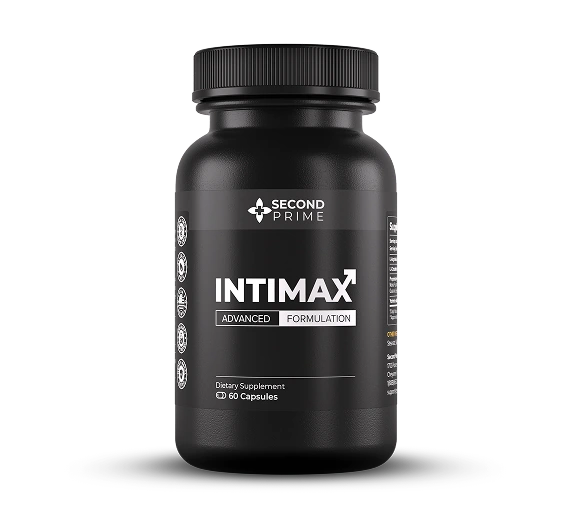
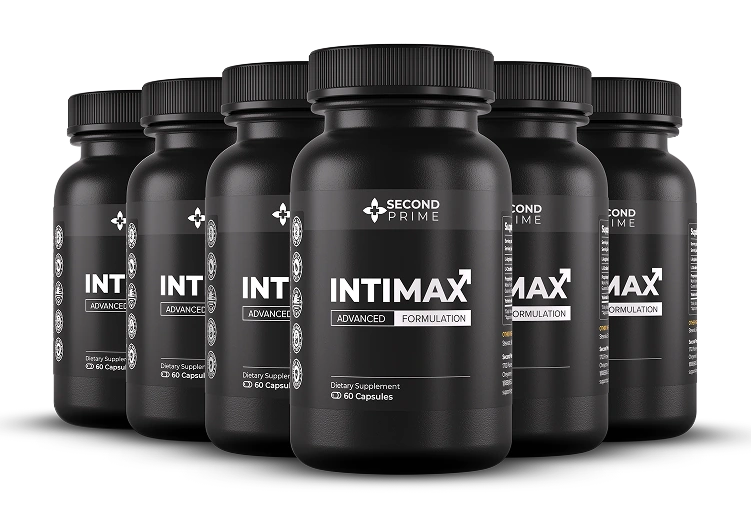
Intimax is built around the first pathway: it supplies the amino-acid raw materials the body uses to make nitric oxide. Intimax provides L-arginine in the AAKG form (arginine alpha-ketoglutarate) and L-citrulline, then layers in botanicals long associated with male stamina — maca, muira puama, catuaba, maritime pine bark, ginger and guarana — feeding the pathway this article describes alongside the diet and movement that do the heavy lifting.
It is worth being clear about what that means. A supplement provides substrate — the building blocks — and cannot force your body to produce a set amount of nitric oxide or guarantee an outcome. Intimax is a complement to healthy habits, not a replacement, and makes no claim to treat any condition. Read the full breakdown in our Intimax review to see the exact dose in Intimax.
See the nitric-oxide amino acids in Intimax
Two capsules a day of L-arginine (AAKG) and L-citrulline plus a traditional botanical blend. The 6-bottle bundle is the best value, with free U.S. shipping and a 90-day money-back guarantee. Check today’s Intimax pricing and package options.
See packages & pricing →
What does the evidence actually show?
The honest summary is that the biology of nitric oxide is well established, while the effect sizes for individual supplements are more modest and mixed. The role of nitric oxide in vasodilation is textbook physiology and not in dispute. Dietary nitrate from beetroot has been studied for its effects on blood flow and exercise performance, with generally supportive but variable results. L-citrulline has reasonable evidence for raising arginine availability, and L-arginine has been studied for circulation with results that depend heavily on dose, form and the individual.
Where evidence is thinner — for several of the traditional botanicals in particular — human trials are limited and much of the support comes from traditional use rather than large modern studies. That does not make the ingredients worthless; it means expectations should be realistic. Results vary with age, health, diet and consistency. If you take medication — especially nitrates or blood-pressure drugs — talk with your doctor before adding any product that targets this pathway.

Putting the science to work
Nitric oxide is the quiet workhorse behind healthy circulation, and the inputs it depends on are ordinary and within reach: move most days, eat a plant-forward diet, protect your sleep, and consider the amino acids that feed the pathway directly. Intimax packages L-arginine and L-citrulline with a botanical blend for everyday men’s vitality. For the habit side, see our guide to supporting healthy blood flow and stamina naturally.
Frequently asked questions
What is nitric oxide in simple terms?
Nitric oxide is a tiny gas molecule your body makes on demand to act as a chemical messenger. Its best-known job is telling the muscle in blood-vessel walls to relax so vessels widen and blood flows more easily. It is not the same as nitrous oxide (laughing gas).
How does nitric oxide affect blood vessels?
Nitric oxide diffuses into the smooth muscle lining a blood vessel and switches on an enzyme that relaxes that muscle. As the muscle relaxes, the vessel widens — a process called vasodilation — which lowers resistance and lets more blood reach the tissue downstream.
Can you increase nitric oxide naturally?
To a degree, yes. Regular exercise, nitrate-rich vegetables such as beets and leafy greens, antioxidant-rich fruit, and the amino acids L-arginine and L-citrulline all feed the body’s two nitric-oxide pathways. These support production rather than force it, and effects build over weeks.
How does Intimax support nitric oxide?
Intimax supplies L-arginine (as AAKG) and L-citrulline, the amino acids the body converts into nitric oxide, alongside traditional botanicals. It provides raw material for the pathway as a complement to diet and exercise, and does not force or guarantee any specific level.
How long does nitric oxide last in the body?
Nitric oxide is extremely short-lived, lasting only seconds before it is broken down. That is why the body makes it continuously and locally, and why steady supply of the nutrients and habits behind it matters more than any single dose.
Is Intimax a treatment for erectile dysfunction?
No. Intimax is a dietary supplement intended to support healthy circulation, stamina and everyday vitality. It is not a drug and is not intended to diagnose, treat, cure or prevent any medical condition, including erectile dysfunction.
References
- Lancaster JR Jr. Historical origins of the discovery of mammalian nitric oxide (nitrogen monoxide) production/physiology/pathophysiology. Biochem Pharmacol. 2020;176:113793. PMID 31923387
- Grönroos R, Eggertsen R, et al. Effects of beetroot juice on blood pressure in hypertension according to European Society of Hypertension Guidelines: a systematic review and meta-analysis. Nutr Metab Cardiovasc Dis. 2024;34(10). PMID 39069465
- Schwedhelm E, Maas R, Freese R, et al. Pharmacokinetic and pharmacodynamic properties of oral L-citrulline and L-arginine: impact on nitric oxide metabolism. Br J Clin Pharmacol. 2008;65(1):51–59. PMID 17662090
- MedlinePlus / U.S. National Library of Medicine. Nitric oxide — overview. medlineplus.gov
- National Center for Complementary and Integrative Health (NCCIH). Dietary supplements for exercise and athletic performance. nccih.nih.gov
- Examine.com. L-Citrulline — evidence-based summary. examine.com/supplements/citrulline
- Examine.com. L-Arginine — evidence-based summary. examine.com/supplements/arginine
- Zhong R, Guo Y, You X, et al. DASH diet, dietary nitrate, and nitric oxide bioavailability: implications for endothelial dysfunction and hypertension in older adults. Mol Nutr Food Res. 2026;70(15):e70569. Zhong et al., Mol Nutr Food Res, 2026
This article is for general education and is not medical advice. Intimax is a dietary supplement and is not intended to diagnose, treat, cure or prevent any disease. Statements have not been evaluated by the Food and Drug Administration. Consult a qualified healthcare professional about your individual needs.