Ginger for circulation in men: why Intimax uses the warming root
Ginger is a warming culinary root tied to circulation and everyday vitality for centuries, across kitchens and traditional medicine alike. This guide looks honestly at what ginger is, how it is traditionally linked to blood flow, what modern research shows, and why a standardised ginger extract sits alongside the nitric-oxide amino acids inside Intimax.

Is ginger good for circulation in men?
- Short version
- Ginger is a warming root traditionally used to support circulation, and its active compounds — gingerols and shogaols — have shown mild vessel-relaxing and anti-platelet activity in early studies. The human evidence is still limited, so ginger is best treated as a supportive food and botanical rather than a proven circulatory treatment, and in Intimax it is one ingredient within a broader blood-flow blend.
- Ginger’s compounds may gently support vessel relaxation and reduce platelet stickiness.
- Most evidence is preclinical or from small trials, so effects are likely modest and gradual.
- Culinary and study amounts often reach up to about 2 grams of concentrated ginger per day.
- In Intimax, ginger backs up the nitric-oxide amino acids L-arginine and L-citrulline — it is not the whole story.
What is ginger, and how is it tied to circulation?
Ginger (Zingiber officinale) is the underground stem, or rhizome, of a flowering tropical plant, used as both food and folk medicine for at least two thousand years. Its distinctive heat comes from compounds called gingerols in the fresh root, which convert to shogaols when it is dried or heated. These are the biologically active molecules researchers point to when discussing any effect ginger has on the body.
The link between ginger and circulation is, first and foremost, a traditional one. In Ayurvedic and traditional Chinese practice, ginger is classed as a “warming” herb — taken to chase cold from the hands and feet, a warmth read as blood moving toward the surface. Modern science does not describe circulation in those terms, but the tradition is what put ginger on the research map. A GRADE-based systematic review and dose-response meta-analysis in the Journal of Human Nutrition and Dietetics pooled the randomised trials of ginger supplementation and blood pressure in adults (Karimi et al., 2026).
How does ginger support blood flow in the body?
The proposed circulation-related actions of ginger centre on two ideas: helping blood vessels relax and making platelets less prone to clumping. When the smooth muscle lining a vessel relaxes, the vessel widens and blood moves more freely — a process called vasodilation. Platelets are the cell fragments that clump to form clots, so compounds that reduce that stickiness can, in theory, support smoother flow. Ginger extracts have shown both effects in the lab, though the size in a healthy person is far less certain.
| Proposed action | What it means | Strength of evidence |
|---|---|---|
| Mild vasodilation | Helping vessel walls relax so blood flows more freely | Mostly preclinical / lab studies |
| Reduced platelet stickiness | Platelets slightly less prone to clumping | Small human and lab studies |
| Antioxidant activity | Helping limit oxidative stress in tissues | Moderate, mostly lab-based |
| Anti-inflammatory signalling | Dialling down inflammatory messengers | Growing, still early in humans |
To be plain: most circulation-specific work on ginger is preclinical, done in test tubes or animals rather than large groups of men. That does not make the tradition wrong, but it does mean ginger is best framed as a promising, supportive ingredient rather than a proven fix. If you want to go deeper on that, our guide to the best vitality supplements for men over 50 covers the same ground in more detail.
Why is ginger called a “warming” circulation herb?
A warming circulation herb is a traditional description for a plant, such as ginger, cayenne or cinnamon, that produces a sensation of internal heat believed to accompany blood moving toward the skin. The label is folk vocabulary, not a validated medical mechanism. When you eat fresh ginger, gingerols activate heat-and-pain sensors on the tongue and gut — the same receptors that respond to chilli. That warmth is real, but it is a nerve response, not direct proof that blood is being redirected.
How do warming herbs compare?
Traditional formulas group warming herbs together because they share that heat-producing quality. Here is how a few of the best-known ones compare.
| Warming herb | Active compound | Traditional circulatory use |
|---|---|---|
| Ginger | Gingerols, shogaols | Warming the extremities, easing cold hands and feet |
| Cayenne | Capsaicin | Stimulating a warm, tingling surface flush |
| Cinnamon | Cinnamaldehyde | A warming spice used with cold constitutions |
| Guarana | Caffeine | Energising and stimulating alertness |
Ginger tends to be the gentlest and most food-like of the group — warming without being harsh, and easily tolerated in culinary amounts — which is why it appears so often in daily-use supplements.
What does the research actually say about ginger?
The strongest human evidence for ginger is not about circulation at all — it is for nausea, where several trials support its use for motion sickness, morning sickness and post-operative queasiness — a track record showing ginger is biologically active and well tolerated in people. For circulation, the picture is thinner: small studies and lab work hint at anti-platelet and mild blood-pressure effects, but large, high-quality trials in healthy men are lacking. A meta-analysis of randomised controlled trials in Complementary Therapies in Medicine examined what ginger supplementation does to metabolic markers (Ebrahimzadeh et al., 2022).
Reviews of ginger’s cardiovascular research reach the same measured conclusion: the compounds are plausible, some early signals are encouraging, and none yet justifies bold claims. This is why Intimax treats ginger as a supporting botanical, not a headline mechanism. The formula’s primary circulatory logic rests on L-arginine and L-citrulline, the amino acids the body converts into nitric oxide, with ginger and other plants layered around that core.
See the exact ginger dose in Intimax
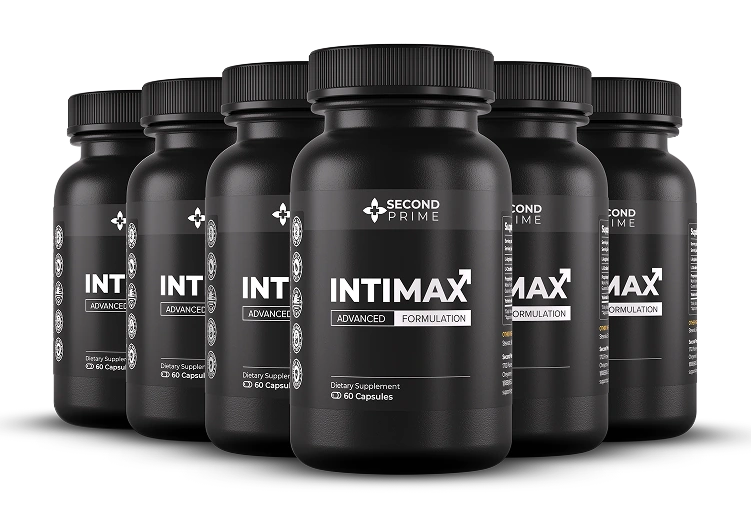
Intimax combines a standardised ginger extract with L-arginine, L-citrulline and a botanical blend in a two-capsule daily serving. The 6-bottle bundle is the best value, with free U.S. shipping and a 90-day money-back guarantee.
Check today’s Intimax pricing →Ginger benefits for men: what else does the root offer?
Beyond its circulatory role, ginger brings general wellbeing benefits that make it a sensible everyday ingredient for men. Its best-supported use is calming nausea and settling the stomach, but its antioxidant and anti-inflammatory activity has also been studied around exercise recovery, joint comfort and metabolic health — areas of active, still-maturing research, not disease claims. It is one of the most widely used botanicals on earth.
Does ginger help with stamina and recovery?
Some small studies have looked at ginger for reducing exercise-induced muscle soreness and inflammation markers after training. The results are mixed and the effect, where present, is modest. Ginger is best viewed as one small supportive layer within a bigger picture of sleep, movement and whole-food nutrition — not a performance booster in its own right.

How much ginger — and where does Intimax fit?
There is no official daily requirement for ginger, but research amounts offer a useful anchor. Culinary use — fresh root in a stir-fry, a mug of ginger tea — is very safe for most people, while studies of concentrated extract have often used doses up to around two grams per day. Getting a consistent amount from raw root is fiddly, since potency varies with freshness and preparation — which is where a standardised extract earns its place, with a known amount every day.
| Way to get ginger | Typical amount | Notes |
|---|---|---|
| Fresh root in cooking | A few grams per meal | Very safe; potency varies a lot |
| Ginger tea | 1–2 cups a day | Gentle, warming, easy daily habit |
| Study-level extract | Up to ~2 g per day | Used in most clinical research |
| Standardised extract in a blend | Fixed daily amount | How Intimax delivers ginger consistently |
Inside Intimax, ginger is one of six traditional botanicals — alongside maca, muira puama and catuaba, plus maritime pine bark and guarana — surrounding the nitric-oxide amino acids at the formula’s core. Nothing to measure, grate or brew: the two-capsule daily serving handles the dose. Our companion piece on supporting healthy blood flow and stamina naturally puts ginger back into the bigger picture of diet and movement. A systematic review and meta-analysis in Nutrition, Metabolism & Cardiovascular Diseases pooled the beetroot-juice trials and assessed their blood-pressure effect against European Society of Hypertension criteria (Grönroos et al., 2024).
Is ginger safe, and who should be careful?
For most men, culinary and supplemental ginger is very well tolerated, with occasional mild heartburn or upset stomach at higher amounts. The cautions are practical. Because ginger may reduce platelet stickiness, it can add to blood-thinning medication such as warfarin or aspirin, so anyone on those drugs or with a bleeding disorder should speak to a doctor first. Large amounts can also nudge blood sugar and blood pressure. As with any new supplement, check with your healthcare provider first — especially if you take prescription medicine.
Frequently asked questions
Is ginger good for circulation?
Ginger is a warming culinary root traditionally used to support circulation, and early laboratory and small human studies suggest its active compounds may help blood vessels relax and reduce platelet stickiness. The human evidence is still limited, so ginger is best seen as a supportive food and botanical rather than a proven circulatory treatment.
How does ginger affect blood flow?
Ginger’s compounds, mainly gingerols and shogaols, have been studied for mild vasodilating and anti-platelet activity, which could in theory support smoother blood flow. Most of this work is preclinical or in small trials, so effects in healthy men are likely modest and gradual.
How much ginger should a man take each day?
Culinary amounts of fresh or dried ginger are widely used, and studies of concentrated ginger have often used up to about two grams per day. Intimax includes a standardised ginger extract as part of a wider blend, so you get a consistent daily amount without measuring the raw root yourself.
Can ginger interact with medication?
Ginger may add to the effect of blood-thinning medication such as warfarin or aspirin, and large amounts can affect blood sugar and blood pressure. If you take any prescription medicine or have a bleeding disorder, talk with your doctor before using concentrated ginger or a ginger-containing supplement.
What is a warming circulation herb?
A warming circulation herb is a traditional term for a plant, such as ginger, cayenne or cinnamon, described in folk practice as creating a sensation of internal warmth thought to accompany blood moving to the surface. It is a traditional-use description, not a validated medical mechanism.
Does Intimax rely on ginger alone?
No. Ginger is one supporting botanical in Intimax. The formula is built around the nitric-oxide amino acids L-arginine and L-citrulline and layers in traditional botanicals including maca, muira puama, catuaba, maritime pine bark, ginger and guarana to support circulation, stamina and everyday vitality.

The bottom line on ginger and Intimax
Ginger for circulation is where old tradition and modern curiosity meet. The root is warming, food-safe and biologically active, with early signals around vessel relaxation and platelet behaviour — but the human circulatory evidence is still thin, so it belongs in a supporting role, not a starring one. That is how Intimax uses it: a standardised ginger extract folded into a blend whose backbone is the nitric-oxide amino acids L-arginine and L-citrulline, all sitting on the habits — movement, whole foods, sleep — that matter most. Read the full Intimax review to see the complete formula.
See the exact dose in Intimax →
References
- Karimi M, Asbaghi O, et al. Ginger supplementation and blood pressure in adults: a GRADE-based systematic review and dose-response meta-analysis of randomized controlled trials. J Hum Nutr Diet. 2026. PMID 42566667
- Ebrahimzadeh A, Ebrahimzadeh A, et al. The effect of ginger supplementation on metabolic profiles in patients with type 2 diabetes mellitus: a systematic review and meta-analysis of randomized controlled trials. Complement Ther Med. 2022;65:102802. PMID 35031435
- Grönroos R, Eggertsen R, et al. Effects of beetroot juice on blood pressure in hypertension according to European Society of Hypertension Guidelines: a systematic review and meta-analysis. Nutr Metab Cardiovasc Dis. 2024;34(10). PMID 39069465
- National Center for Complementary and Integrative Health (NCCIH). Ginger. nccih.nih.gov/health/ginger
- Examine.com. Ginger — evidence-based summary. examine.com/supplements/ginger
- Marx W, McKavanagh D, McCarthy AL, et al. The effect of ginger (Zingiber officinale) on platelet aggregation: a systematic literature review. PLoS One. 2015;10(10):e0141119. Marx et al., PLoS One, 2015
- National Center for Biotechnology Information (NCBI Bookshelf). Zingiber officinale (ginger) overview. ncbi.nlm.nih.gov/books/NBK92775
- Mayo Clinic. Ginger — uses and safety. mayoclinic.org
This article is for general education and is not medical advice. Intimax is a dietary supplement and is not intended to diagnose, treat, cure or prevent any disease. Statements have not been evaluated by the Food and Drug Administration. Consult a qualified healthcare professional about your individual needs.