Maritime pine bark benefits for circulation in the Intimax formula
Maritime pine bark is a concentrated source of proanthocyanidin antioxidants studied for their role in supporting the blood-vessel lining, nitric-oxide signalling and healthy circulation. In the Intimax formula it sits alongside nitric-oxide amino acids and traditional botanicals as one antioxidant-rich layer of the blend. This guide unpacks what the ingredient is, what the evidence shows, and where it honestly fits for men.
Everything you need in one quotable paragraph.
- Short version
- Maritime pine bark benefits center on its proanthocyanidin antioxidants, which appear to support the endothelium and help protect nitric oxide — the molecule that lets blood vessels relax and widen. Evidence points to circulation and antioxidant support rather than any cure, and quality varies between extracts.
- What it is: extract of French maritime pine (Pinus pinaster) bark, rich in proanthocyanidins.
- Why men take it: to support endothelial function, nitric oxide and healthy blood flow.
- Evidence level: promising but modest — mostly small trials, often on the branded Pycnogenol extract.
- In Intimax: one antioxidant botanical layered with L-arginine, L-citrulline and traditional herbs.
What is maritime pine bark, and why does circulation care?
Maritime pine bark extract is a plant compound harvested from the bark of the French maritime pine (Pinus pinaster) and concentrated for its antioxidant flavonoids. What makes it interesting for circulation is chemistry rather than folklore: the bark is unusually dense in proanthocyanidins, the same family of polyphenols that give grape seed and cocoa their reputation for supporting blood vessels. The core idea is simple — healthy vessels depend on a balance of relaxation signals and antioxidant protection, and pine bark supplies raw material relevant to both.
Circulation is a network, not a single organ. The heart pumps, but the vessels themselves regulate how much blood reaches each tissue by widening and narrowing on demand. That responsiveness is governed by a thin inner lining called the endothelium and the short-lived molecule it releases: nitric oxide. Anything that supports the endothelium’s ability to make and preserve nitric oxide is, in theory, supporting circulation itself.
How does pine bark extract support nitric oxide?
Pine bark extract nitric oxide support works through two complementary routes: helping the endothelium produce nitric oxide and helping protect it from being broken down too quickly. Nitric oxide is a signalling gas that tells the smooth muscle around your arteries to relax, widening vessels in a process called vasodilation. The catch is that it is fragile — oxidative stress from ageing, poor diet and inflammation can neutralise it before it does its job.
This is where the antioxidant angle matters. In laboratory and small human studies, pine bark proanthocyanidins appear to support the enzyme that generates nitric oxide (endothelial nitric-oxide synthase) while mopping up free radicals that would otherwise degrade it. Researchers often observe better flow-mediated dilation, a standard measure of how well vessels open. These are supportive, incremental effects — not the punch of a prescription medicine.
Does it work like L-arginine and L-citrulline?
Not exactly. L-arginine and L-citrulline are the amino-acid substrates the body converts into nitric oxide — the building blocks. Maritime pine bark plays a complementary role, acting more like a protective antioxidant around that pathway, which is why a formula might include both. For the substrate side of the story, see our companion guide on L-arginine and L-citrulline for men.
What is Pycnogenol, and is it the same thing?
Pycnogenol is a specific, standardised, trademarked extract of French maritime pine bark, and it is the version behind most published pycnogenol for circulation research. When a study reports a benefit from “pine bark,” it is usually testing Pycnogenol at a defined proanthocyanidin content and dose. Generic extracts contain the same broad family of compounds, but standardisation and potency can differ, so evidence for one product does not automatically transfer to another. The practical takeaway is to read the ingredient panel, not the headline. The table below summarises how the terms relate. A Cochrane systematic review pooled 27 randomised trials of pine bark extract across ten chronic disorders and concluded the evidence was too small and too varied to draw firm conclusions (Robertson et al., Cochrane Database Syst Rev, 2020).
| Term | What it means | Why it matters |
|---|---|---|
| Maritime pine bark | Bark of Pinus pinaster, the raw botanical source | The plant family behind all these extracts |
| Pine bark extract | Concentrated proanthocyanidins from that bark | Potency depends on how it is standardised |
| Pycnogenol | A branded, standardised French maritime pine extract | The specific form used in most clinical trials |
| Proanthocyanidins | The active antioxidant polyphenols within | The compounds credited with vessel support |
Proanthocyanidins: what are these antioxidants doing?
Proanthocyanidins are the antioxidant polyphenols that make maritime pine bark worth studying in the first place. Chemically they are chains of flavonoid units, and their role in the body is about balance: neutralising reactive oxygen species that damage tissues and interfere with signalling molecules like nitric oxide. Oxidative stress is a normal part of metabolism, but a chronic excess is associated with stiffer, less responsive blood vessels as we age.
By contributing to the body’s antioxidant defences, proanthocyanidins may help preserve the conditions under which circulation works well. Some research also points to gentle effects on platelet behaviour and capillary integrity, which is why pine bark has been examined for concerns like leg heaviness and swelling. As always, “examined” is not “proven for everyone,” but the mechanism is plausible and consistent with other plant polyphenols.
See the exact dose in Intimax
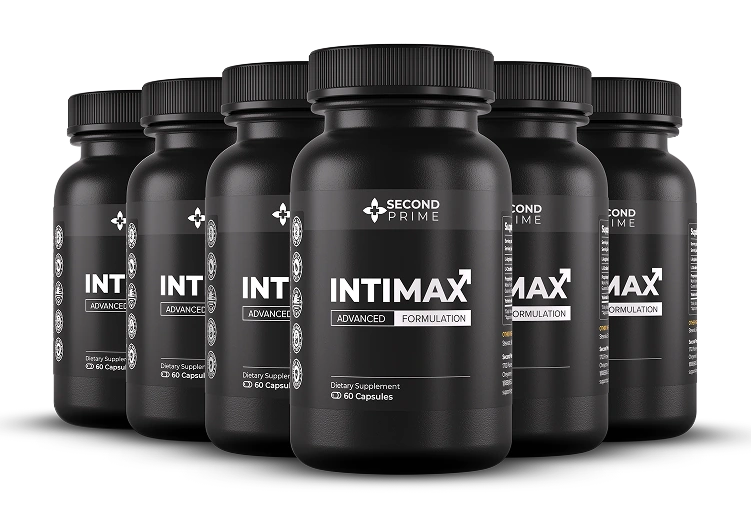
Maritime pine bark is one antioxidant layer in the Intimax blend, standardised into a simple two-capsule daily serving with nitric-oxide amino acids and traditional botanicals. The 6-bottle bundle is the best value, with free U.S. shipping and a 90-day money-back guarantee.
Check today’s Intimax pricing →Maritime pine bark for men: circulation, stamina and vitality
Maritime pine bark for men is usually framed around circulation, stamina and everyday vitality, because those are the areas where healthy blood flow is most noticeable. Muscles that receive oxygen efficiently feel more capable, and the same vascular biology that serves your legs on a walk serves the rest of the body. It is reasonable, then, that an ingredient supporting endothelial function draws interest from men focused on staying active as they age. A PRISMA-compliant meta-analysis of randomised, double-blind, placebo-controlled studies in Angiology examined what Pycnogenol does to blood pressure (Fogacci et al., 2020).
The honest version avoids over-claiming. Maritime pine bark is not a performance drug, and it will not override poor sleep, inactivity or an ultra-processed diet. Its most defensible role is as a supporting antioxidant nutrient layered on top of the fundamentals — movement, whole-food nutrition and rest, a topic we cover in our guide to supporting healthy blood flow and stamina naturally.
Who might be most interested?
Men in their forties, fifties and beyond often notice that vascular responsiveness needs a little more support. That is not a diagnosis but normal biology, and it is the same group most drawn to antioxidant-rich foods. Maritime pine bark simply concentrates a category of polyphenol many people already seek from berries, cocoa and grapes.

How does maritime pine bark fit in the Intimax formula?
Inside Intimax, maritime pine bark works as the antioxidant partner to the formula’s nitric-oxide amino acids rather than as a headline actor. The logic is straightforward: supply the substrates for nitric oxide with L-arginine (as AAKG) and L-citrulline, then layer in polyphenol-rich botanicals — pine bark among them — that support the antioxidant environment those signalling molecules depend on. Around that core sit traditional herbs used for male stamina: maca, muira puama, catuaba, ginger and guarana.
This combination approach is common in modern men’s formulas because circulation is multifactorial — no single ingredient controls blood flow, so a blend aims to touch several supporting points at once. The trade-off is that blends usually contain smaller amounts of each ingredient than a single-ingredient megadose, another reason to read the Supplement Facts panel and set expectations accordingly. You can review the full ingredient rationale on the main Intimax review, or explore the traditional botanicals that round out the blend. There is more on ginger root and circulation in men in a dedicated article.
| Role in the blend | Ingredient | What it contributes |
|---|---|---|
| Nitric-oxide substrate | L-arginine, L-citrulline | Building blocks the body converts to nitric oxide |
| Antioxidant support | Maritime pine bark | Proanthocyanidins to protect the vessel environment |
| Traditional vitality herbs | Maca, muira puama, catuaba | Botanicals long used for male stamina |
| Everyday energy botanicals | Ginger, guarana | Culinary and energy herbs in the surrounding blend |
What does the evidence actually say — and where is it weak?
The honest summary is that maritime pine bark shows promising but modest evidence for circulation support, drawn mostly from small trials on the branded Pycnogenol extract. Several studies report improvements in endothelial function, flow-mediated dilation and antioxidant markers, and the mechanism is biologically coherent — an encouraging picture for a botanical, but one with real caveats. An overview in Frontiers in Nutrition catalogues the randomised, double-blind, placebo-controlled human studies run on French maritime pine bark extract (Weichmann & Rohdewald, 2024).
First, many trials are small, short and sometimes funded by extract manufacturers, which calls for caution. Second, most research uses a specific standardised extract at a defined dose, so results may not generalise to every product or the amount in a multi-ingredient blend. Third, individual response varies with age, baseline health, diet and medication. The appropriate expectation is “supportive nutrient with a plausible mechanism,” not “proven treatment.” Where evidence is thin, we would rather say so than oversell.
How is maritime pine bark used and is it safe?
Maritime pine bark extract is generally well tolerated in studies at typical supplement doses, with mild digestive upset the most commonly reported complaint. Standalone doses often fall in a modest daily range taken with food, and within a blend like Intimax the ingredient is standardised into the two-capsule daily serving rather than measured out by the user. As with any antioxidant supplement, consistency over weeks matters more than any single dose.
Safety context matters. Because pine bark proanthocyanidins can influence platelet behaviour and vascular tone, the extract may interact with blood thinners, blood-pressure medication and diabetes medication. Anyone taking prescription drugs — particularly nitrates or anticoagulants — who is pregnant, or who manages a medical condition should speak with a doctor first. This is educational information, not a substitute for individual medical advice.
Frequently asked questions
What are the main maritime pine bark benefits for circulation?
Maritime pine bark supplies concentrated proanthocyanidin antioxidants that appear to support the endothelium — the vessel lining that releases nitric oxide — and help protect nitric oxide once it is made. In studies this has been linked with healthier blood-vessel function, though results vary by dose, product and person.
Is Pycnogenol the same as maritime pine bark extract?
Pycnogenol is a specific, standardised, trademarked extract of French maritime pine bark used in most of the published research. Generic maritime pine bark extracts contain the same broad family of proanthocyanidins but are not always standardised the same way, so evidence for one brand does not automatically transfer to another.
How does pine bark extract affect nitric oxide?
Laboratory and small clinical studies suggest pine bark proanthocyanidins can help the endothelium produce nitric oxide and reduce oxidative stress that would otherwise break nitric oxide down early. Nitric oxide signals blood vessels to relax and widen, which is central to healthy circulation.
How much maritime pine bark is in Intimax?
Maritime pine bark is one botanical within the Intimax blend, alongside L-arginine, L-citrulline, maca, muira puama, catuaba, ginger and guarana. Check the current Supplement Facts panel on the order page for the exact amount, since formulas can be updated over time.
Is maritime pine bark safe for men to take daily?
Maritime pine bark extract is generally well tolerated in studies at typical supplement doses, with mild digestive upset the most common complaint. It may interact with blood thinners, blood-pressure and diabetes medication, so anyone on medication or with a health condition should talk to a doctor first.
Does maritime pine bark treat erectile dysfunction?
No. Maritime pine bark is a dietary-supplement ingredient studied for circulation and antioxidant support, not an approved treatment for any medical condition. Intimax is not a drug and is not intended to diagnose, treat, cure or prevent erectile dysfunction or any disease.
The bottom line on maritime pine bark and Intimax
Maritime pine bark earns its place as a supporting antioxidant ingredient with a plausible role in circulation — not as a miracle. Its proanthocyanidins help defend the vascular environment nitric oxide needs, which is why it pairs naturally with the nitric-oxide amino acids at the heart of Intimax. Treat it as one considered layer on top of movement, nutrition and rest, keep expectations proportional to the evidence, and you have a sensible way to think about the ingredient.

References
- Robertson NU, Schoonees A, Brand A, Visser J. Pine bark (Pinus spp.) extract for treating chronic disorders. Cochrane Database Syst Rev. 2020;9:CD008294. PMID 32990945
- Fogacci F, Tocci G, et al. Effect of Pycnogenol on blood pressure: findings from a PRISMA compliant systematic review and meta-analysis of randomized, double-blind, placebo-controlled clinical studies. Angiology. 2020;71(3):217–225. PMID 31763928
- Weichmann F, Rohdewald P. Pycnogenol French maritime pine bark extract in randomized, double-blind, placebo-controlled human clinical studies. Front Nutr. 2024;11:1389374. PMID 38757130
- Examine.com. Pycnogenol (French maritime pine bark) — evidence-based summary. examine.com/supplements/pycnogenol
- Enseleit F, Sudano I, Périat D, et al. Effects of Pycnogenol on endothelial function in patients with stable coronary artery disease: a double-blind, randomized, placebo-controlled, cross-over study. Eur Heart J. 2012;33(13):1589–1597. Enseleit et al., Eur Heart J, 2012
- Cui X, Liu X, Feng H, et al. Grape seed proanthocyanidin extracts enhance endothelial nitric oxide synthase expression through the AMPK/SIRT1–KLF2 pathway and modulate blood pressure in ouabain-induced hypertensive rats. Biol Pharm Bull. 2012;35(12):2192–2197. Cui et al., Biol Pharm Bull, 2012
- National Center for Complementary and Integrative Health (NCCIH). Antioxidants: In Depth. nccih.nih.gov/health/antioxidants-in-depth
- National Center for Biotechnology Information (NCBI Bookshelf). Nitric oxide and vascular biology. ncbi.nlm.nih.gov/books
This article is for general education and is not medical advice. Intimax is a dietary supplement and is not intended to diagnose, treat, cure or prevent any disease. Statements have not been evaluated by the Food and Drug Administration. Consult a qualified healthcare professional about your individual needs.