How to choose a nitric oxide supplement: the Intimax buyer’s guide
Choosing a nitric oxide supplement comes down to a short list of criteria: the right precursor amino acids, honest doses, a clean and transparent label, and manufacturing you can verify. This guide turns those criteria into a practical checklist, explains why each one matters, and uses Intimax as a worked example so you can see what a well-built formula actually looks like on the shelf.
How to choose a nitric oxide supplement, in brief.
- Short version
- To choose a nitric oxide supplement, look for the precursor amino acids L-arginine (or AAKG) and L-citrulline together, a supporting polyphenol such as maritime pine bark, doses that are stated clearly on the supplement facts panel, and a clean label made in a GMP, FDA-registered facility. Match the format — capsule or powder — to what you will take every day.
- Actives: arginine + citrulline is the core pairing; pine bark is a useful add-on.
- Doses: stated per serving, not hidden inside a proprietary blend.
- Label: no unnecessary fillers, colours or undeclared allergens.
- Trust: GMP manufacturing, made in the USA, clear money-back terms.
What does a nitric oxide supplement actually do?
A nitric oxide supplement is a product designed to supply the raw materials your body uses to make nitric oxide, the short-lived signalling molecule that tells the smooth muscle in blood-vessel walls to relax and widen. It does not contain nitric oxide itself — the molecule is far too unstable for that — so instead it delivers precursors and cofactors the body converts along two pathways: the arginine pathway and the dietary-nitrate pathway. When you understand that distinction, most marketing claims become easier to judge.
Because nitric oxide production tends to decline with age, men look to these formulas to support healthy circulation, stamina and everyday energy. The key word is support: a supplement provides inputs, it does not override your diet, activity and sleep. For the biology, see our companion piece on how to boost nitric oxide naturally.
Which ingredients should a nitric oxide supplement contain?
The best nitric oxide ingredients are the precursors and protectors of the arginine pathway, led by L-arginine and L-citrulline working together. Everything else on a label is either supporting that core, adding a complementary stamina or energy angle, or — in weaker products — simply filling space. Use the table below as a quick screen when you compare two bottles.
| Ingredient | Role in the formula | Evidence signal |
|---|---|---|
| L-arginine (incl. AAKG) | Direct precursor the body converts to nitric oxide | Well studied; absorption varies |
| L-citrulline | Recycles into arginine, raising it for longer | Well studied; strong pairing partner |
| Maritime pine bark | Polyphenol that supports the NO pathway | Promising but limited |
| Maca, muira puama, catuaba | Traditional botanicals for stamina & drive | Traditional use; emerging data |
| Ginger & guarana | Circulation and everyday energy support | Modest, supportive evidence |
Why does arginine plus citrulline beat either one alone?
Arginine and citrulline together outperform either amino acid alone because they act at different points in the same cycle. L-arginine is the direct precursor, but much of an oral dose is broken down in the gut and liver before it reaches the bloodstream. L-citrulline sidesteps that first-pass breakdown and is converted back into arginine in the kidneys, keeping circulating arginine higher for longer. Pairing the two feeds the pathway more efficiently than loading up on arginine alone — a point our L-arginine vs L-citrulline deep-dive covers in full. In a double-blind, randomised, placebo-controlled crossover study of 20 healthy volunteers, oral L-citrulline raised plasma L-arginine dose-dependently and more effectively than L-arginine itself, though no arm improved flow-mediated dilation over baseline that week (Schwedhelm et al., Br J Clin Pharmacol, 2008).
Where does maritime pine bark fit?
Maritime pine bark extract, often sold as pycnogenol, is a polyphenol studied for its role in supporting the body’s own nitric-oxide production and healthy blood-vessel function. Several small trials have looked at it alongside L-arginine, which is why you will see the two paired in circulation-focused formulas. The evidence is encouraging rather than conclusive, so treat pine bark as a sensible supporting ingredient, not the headline act. Our pine bark and circulation guide weighs the research in more depth. A Cochrane systematic review pooled 27 randomised trials of pine bark extract across ten chronic disorders and concluded the evidence was too small and too varied to draw firm conclusions (Robertson et al., Cochrane Database Syst Rev, 2020).
What doses should you look for on the label?
The dose that matters is the one per serving, not the total in the bottle or the biggest number on the front. Human studies of the arginine pathway typically use gram-level amounts, and many capsule products sit below those research doses — which is fine for daily support, as long as the label is honest. The table below shows the ranges seen in the literature.
| Ingredient | Typical studied range (per day) | What to check on the label |
|---|---|---|
| L-arginine | ~3–6 g, often split | Amount per serving, and the serving count |
| L-citrulline | ~3–6 g, often split | Free citrulline vs citrulline malate |
| Maritime pine bark | ~100–200 mg | Standardised extract, stated mg |
| Supporting botanicals | Varies by herb | Named amounts, not a hidden blend |
If a product buries its arginine and citrulline inside a “proprietary blend” with only a combined figure, you cannot tell whether you are getting a meaningful amount of each or a pinch behind a wall of cheaper filler. That single detail — named doses versus a blur — separates transparent formulas from the rest.
How do you read a clean label?
A clean label on a nitric oxide supplement is one where every active ingredient and its dose is disclosed, proprietary blends are minimal or absent, and the “other ingredients” line is short and free of unnecessary colours, sweeteners and allergens. Reading it well takes about thirty seconds once you know the order to look in.
What should you check first?
Start with the supplement facts panel, not the marketing. Confirm the serving size, then find L-arginine and L-citrulline and read their per-serving amounts. Scan for AAKG (alpha-ketoglutarate), a common arginine form we explain in this guide to AAKG. Then read the “other ingredients” line: capsule material, a flow agent or two, and little else is the ideal. Long lists of dyes, artificial flavours and unnamed blends are a reason to keep looking.
Which trust markers actually matter?
Manufacturing quality is the part you cannot taste. Look for products made in a GMP-compliant, FDA-registered facility, ideally in the USA, and for clearly stated non-GMO, gluten-free and dairy-free claims if those matter to you. A straightforward, time-bound money-back guarantee is another good sign, because it shows the company expects you to judge the product on results rather than hype. An assessment of the FDA’s tainted-supplements database from 2007 through 2021, published in the Journal of Clinical Pharmacology, identified 1,068 products adulterated with active pharmaceutical ingredients, with sexual-enhancement and weight-loss products the most commonly affected (White, 2022).
Capsules or powder — which format should you choose?
Neither capsules nor powders are inherently superior; the right format is the one you will take every day. Powders make it easier to reach the gram-level doses used in research and let you adjust the amount, but they need mixing and carry a taste. Capsules offer fixed, convenient dosing with no measuring and no flavour. If a mixed drink will sit unused on your counter, capsules win by default. Our comparison of nitric oxide capsules vs powders lays out the trade-offs.
How does Intimax measure up against the checklist?
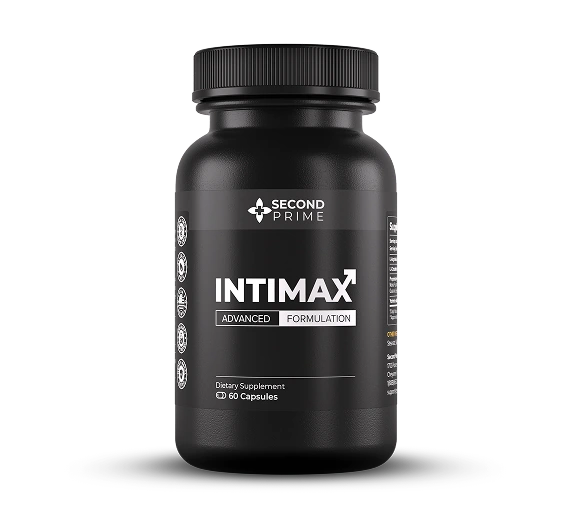
Intimax is a once-daily capsule formula built around exactly the criteria above, which is why it is our reference point here. It supplies L-arginine as AAKG with L-citrulline — the precursor pairing that feeds the pathway more efficiently than arginine alone — and adds maritime pine bark plus the botanicals maca, muira puama, catuaba, ginger and guarana for stamina and energy. The doses are printed on the panel rather than hidden in a blend, and it is a non-GMO, gluten-free, dairy-free formula made in an FDA-registered, GMP facility in the USA. See the full breakdown in our Intimax review and ingredient overview.
See the exact dose in Intimax
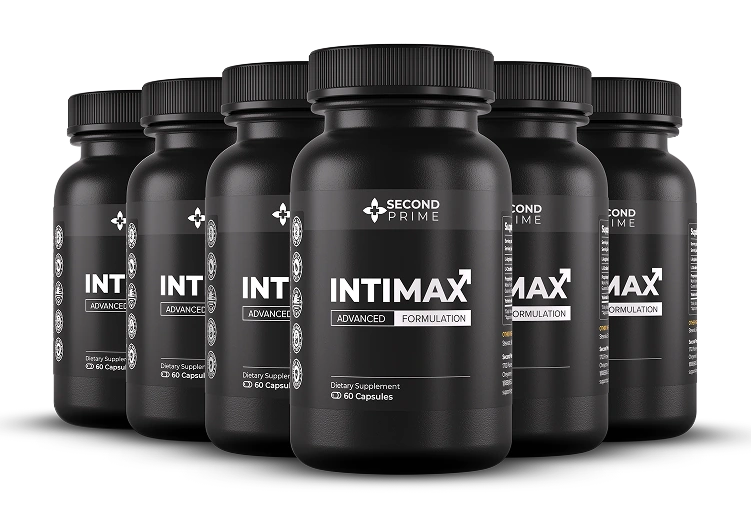
Want the real per-serving numbers behind this checklist? The Intimax supplement facts panel lists its L-arginine (AAKG), L-citrulline and pine bark amounts in full — and the 6-bottle bundle is the best value, with free U.S. shipping and a 90-day money-back guarantee.
See packages & pricing →What does a simple buying checklist look like?
The fastest way to choose a nitric oxide supplement is to run every candidate through the same short checklist and reject anything that fails the first three points. Print it, screenshot it, or keep it in mind next time you compare two bottles.
| Checkpoint | Pass looks like |
|---|---|
| Core actives | L-arginine (or AAKG) and L-citrulline both present |
| Transparent doses | Each amount stated per serving, no hidden blend |
| Supporting ingredient | Pine bark or another evidence-backed add-on |
| Clean label | Short “other ingredients” line, stated allergens |
| Manufacturing | GMP, FDA-registered facility, made in USA |
| Guarantee | Clear, time-bound money-back terms |
Work top to bottom and let the label do the talking. A formula like Intimax that clears every row gives you far more to go on than a flashy bottle with one headline number. Once you have found one that passes, the last step is to start — check today’s Intimax pricing and pick the package that suits how long you want to try it.

Frequently asked questions
What is the best ingredient combination in a nitric oxide supplement?
The strongest combination pairs L-arginine (or its AAKG form) with L-citrulline, because citrulline keeps arginine levels raised for longer than arginine taken alone. Many quality formulas add a polyphenol such as maritime pine bark to support the nitric-oxide pathway, plus supporting botanicals for stamina and energy.
How much L-arginine and L-citrulline should a nitric oxide supplement contain?
Research commonly studies roughly 3 to 6 grams of L-arginine and 3 to 6 grams of L-citrulline per day, often split across servings. Many capsule products use smaller, more convenient doses, so read the supplement facts panel and match the label to the serving size rather than the headline claim.
Does pine bark extract help nitric oxide?
Maritime pine bark extract (pycnogenol) is a polyphenol that has been studied for supporting the body’s nitric-oxide pathway and healthy circulation, often in combination with L-arginine. Evidence is promising but still limited, so treat it as a supporting ingredient rather than a guarantee.
What does a clean label mean on a nitric oxide supplement?
A clean label means the active ingredients and their doses are clearly listed, proprietary blends that hide amounts are minimal or absent, and unnecessary fillers, artificial colours and allergens are kept out. Third-party quality markers such as GMP manufacturing and a made-in-USA, FDA-registered facility add further reassurance.
Are capsules or powders better for nitric oxide?
Neither is inherently better. Powders make it easier to reach the larger arginine and citrulline doses used in studies, while capsules offer convenience, consistent dosing and no taste. The best choice is the format you will actually take every day.
Is Intimax a treatment for erectile dysfunction?
No. Intimax is a dietary supplement intended to support healthy circulation, stamina and everyday vitality. It is not a drug and is not intended to diagnose, treat, cure or prevent any medical condition.
References
- Schwedhelm E, Maas R, Freese R, et al. Pharmacokinetic and pharmacodynamic properties of oral L-citrulline and L-arginine: impact on nitric oxide metabolism. Br J Clin Pharmacol. 2008;65(1):51–59. PMID 17662090
- Robertson NU, Schoonees A, Brand A, Visser J. Pine bark (Pinus spp.) extract for treating chronic disorders. Cochrane Database Syst Rev. 2020;9:CD008294. PMID 32990945
- White CM. Continued risk of dietary supplements adulterated with approved and unapproved drugs: assessment of the US Food and Drug Administration’s tainted supplements database 2007 through 2021. J Clin Pharmacol. 2022;62(8):928–934. PMID 35285963
- Examine.com. L-Citrulline — evidence-based summary. examine.com/supplements/citrulline
- Examine.com. L-Arginine — evidence-based summary. examine.com/supplements/arginine
- Mayo Clinic. L-arginine. mayoclinic.org/drugs-supplements-l-arginine
- NIH Office of Dietary Supplements. Dietary Supplements: What You Need to Know. ods.od.nih.gov
- Reule CA, Goyvaerts B, Schoen C. Effects of an L-arginine-based multi-ingredient product on endothelial function in subjects with mild to moderate hypertension and hyperhomocysteinemia: a randomized, double-blind, placebo-controlled, cross-over trial. BMC Complement Altern Med. 2017;17(1):92. Reule et al., BMC Complement Altern Med, 2017
This article is for general education and is not medical advice. Intimax is a dietary supplement and is not intended to diagnose, treat, cure or prevent any disease. Statements have not been evaluated by the Food and Drug Administration. Consult a qualified healthcare professional about your individual needs, especially if you take nitrate or blood-pressure medication.